寄送至:
rsgtaipei.tat@gmail.com
主旨:欲由XXX品牌大使推薦參與 RSG Taipei 2026


Let the World See Taiwan: This Time, the World Said It for Us
A regional Scrum gathering earned itself a global case study — written not by us, but by Scrum Alliance's own official account, followed by 440,000 people. 221 attendees, a full day of hands-on work, a 9.27 satisfaction score, an NPS of 71 (on a -100 to +100 scale), and 70% of the room at management level or above — the group that gave the highest marks of all. This wasn't the size of the event. It was seven months of preparation, a team of volunteers who were trusted to lead, and the nerve to put "Let the World See Taiwan" on the closing video's opening title. Real scale is never something you claim for yourself — it's something other people choose to say about you.
RSG TAIPEI|By Roger Chou|Taiwan’s First International Agile Ambassador Date: 2026/09/08
We hired a professional video team to shoot the closing film, and the English title card reads: “Let the World See Taiwan.” I wrote that line for myself — until early September, when Scrum Alliance took its own official account, the one followed by 440,000 people, and turned RSG Taipei 2026 into a case study for the entire world to see. This time, I didn’t tell the world what Taiwan had done. I prepared the story and handed it over — and global headquarters chose to tell it themselves, in their own name, unchanged.
1. I decided on that title seven months before the video existed
The day both the Chinese and English cuts of the RSG Taipei 2026 closing video went live, I watched the final edit from director Fan Shu-ming’s team, and that opening line — “Let the World See Taiwan” — was a title I had locked in back at the planning stage, not something dressed up after the fact.
What gives a regional Scrum gathering the standing to put “let the world see Taiwan” on its own title card? No one handed me a rulebook for that. What I know is that scale isn’t granted by anyone else — you decide how high to stand, and then you assemble the people one by one: volunteers, speakers, a venue, entrepreneurs willing to bet on the idea. Seven months, from kickoff on January 15th to the event itself on August 15th, built one day at a time.
2. August 15th: 221 people, a full day with no one checking their phone
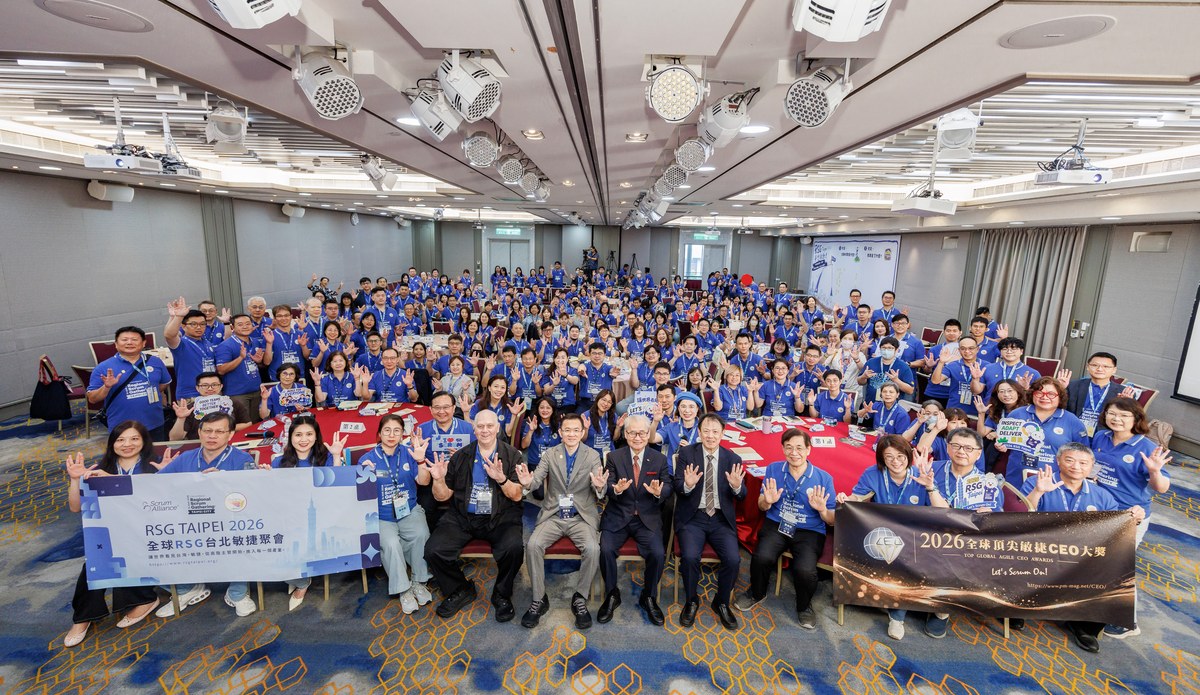
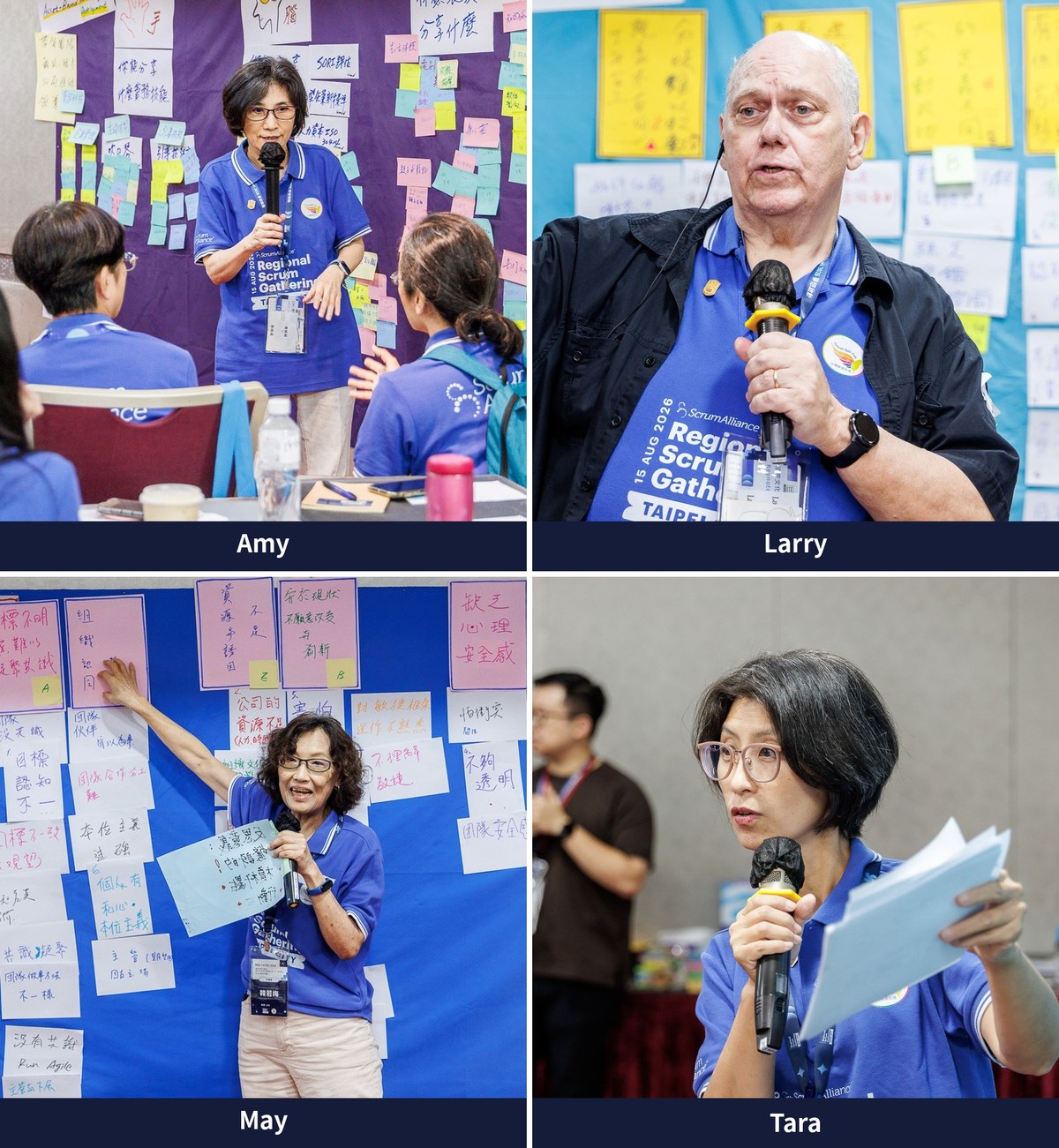
On the day itself, 221 people spent a full day in Taipei doing real work — not sitting through keynotes, but being pushed, challenged, and pressed by the unresolved problems sitting at their own tables, round after round, until the answers came. Satisfaction: 9.27 out of 10. Net Promoter Score: 71. I went back and checked both numbers more than once before I let myself believe them.
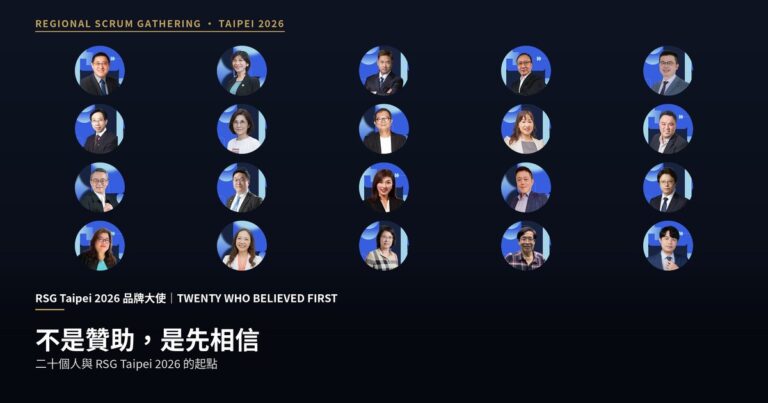
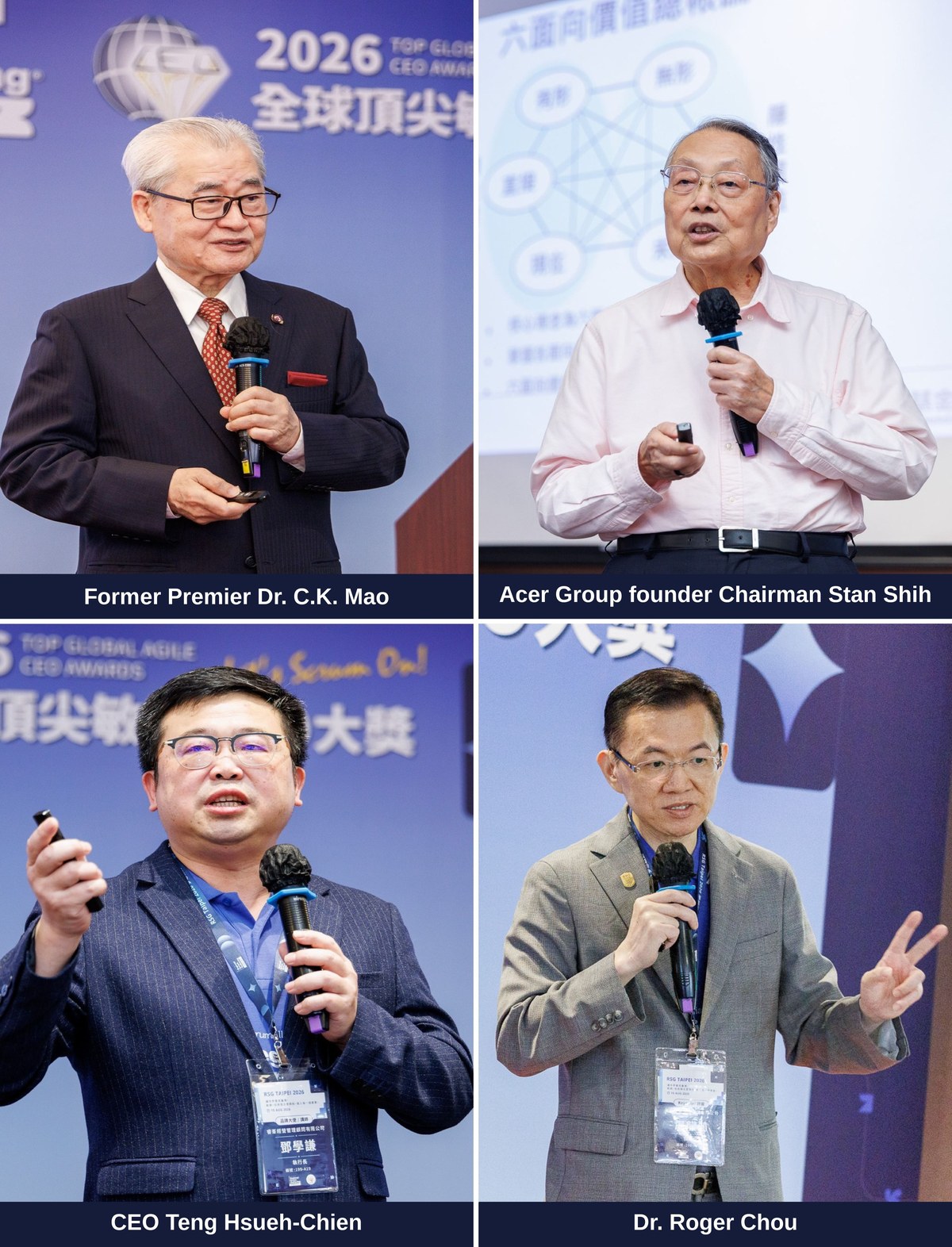
Four heavyweight speakers held the room for the entire day without a single flat moment: former Premier Mao Chi-kuo, Acer founder Stan Shih, CEO Deng Hsueh-chien, and me. The title Scrum Alliance’s own copy gave me was “Taiwan’s first International Agile Ambassador and newly elected Scrum Alliance Global Board Director.” Someone else wrote that line — I didn’t add it myself. For the first time, someone attached a title of that weight to the word “Taiwan,” in a place the entire world could see.
Executive perspective: Pulling off a large event only proves you can mobilize people. When global headquarters chooses, on its own, to put its name behind you and write your title into an official post, that proves something else entirely — trust. And trust is never built by one event. It’s built one day at a time, over seven months.
3. 14 CEOs took the stage, and one said the heaviest line of the day
Fourteen recipients of the fourth annual Global Top Agile CEO Award shared the stage together. One of them, Chairman Chen-Yuan Lo, said something I still remember word for word: “I used to win awards to prove I could do it. Today I’m winning this one to prove agile can.”
That same day, the first-ever Enterprise Agile Talent Development Award went to ten companies, and the ACE Global Top Agile CEO Alumni Association held its second handover ceremony. This isn’t an event that ends when the event ends — it’s a community that keeps growing. This year added another cohort of winners, another handover, another group of entrepreneurs willing to stand up and say, out loud, that agile can.
4. 70% of the 221 attendees were executives — and they gave the highest scores of all
Of the 221 people in the room, 70% held management-level roles or above. And that group gave the highest scores of any segment at the event.
The people whose time is most expensive are, in theory, the least willing to sit through a full day of workshop work with no immediate output. They didn’t leave early — and they still rated it the highest. That’s not a polite score. That’s someone telling you it was genuinely worth their day.
Honestly, I’ve coached plenty of corporate training programs, and the line I dread most is “our executives are busy — can we just do a half-day?” At RSG Taipei, the executives were the most engaged people in the room, all day. That’s worth remembering for anyone who runs corporate training.
Executive perspective: The people whose time is most expensive gave the highest scores — that’s not a coincidence, it’s an honest market signal. When decision-makers are willing to give a full day to a workshop with no ready-made answers, it means they already know the real problem was never a shortage of methodology. What’s missing is a room that forces them to face it directly.
5. A line from Nan Yi’s chairman was quoted, word for word, in the official post
Wei-Chuan Su, Chairman of Nan Yi Education Group, said something on stage that Scrum Alliance quoted verbatim in its official post: “Corporate sustainability is built on a system that continuously delivers value.”
I didn’t write that line for him. He said it himself, and the world saw it. That’s what agile transformation is actually supposed to look like — not installing a new toolkit, but replacing the underlying system with one that delivers value continuously.
6. 118 badges, each one engraved with a name
One line in the official post stood out to me enough that I read it twice: “Every badge worn by a volunteer, and the bilingual recap video, were proposed, designed, and made entirely by the volunteer team themselves.”
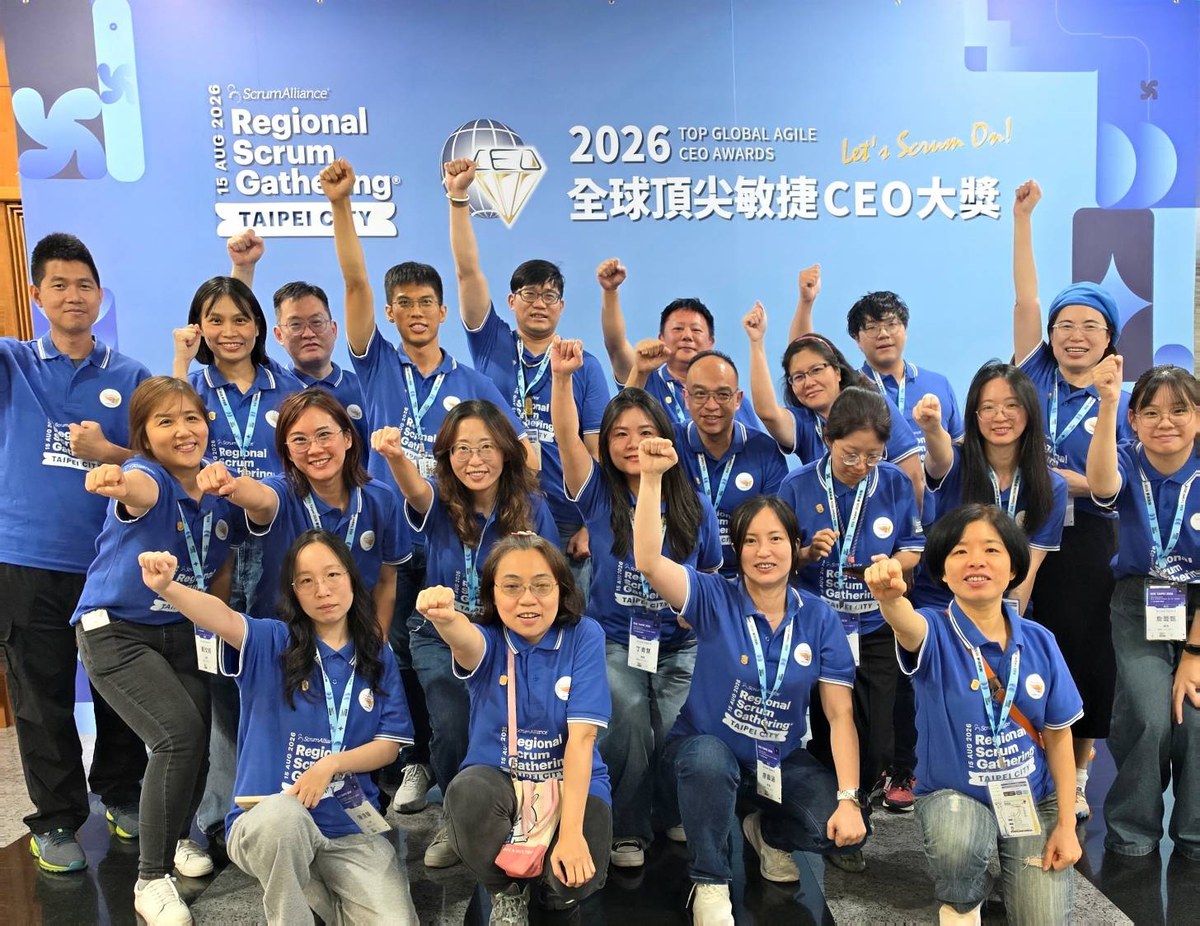
Behind that is a name: Chloe Chang. She proposed and led the design of RSG Taipei’s badges — 118 of them, each individually engraved with a name, no two alike. No one convened a meeting to decide this needed doing, and no one assigned it to anyone. The volunteer team simply decided this day deserved to be remembered properly, and they carried it through themselves.
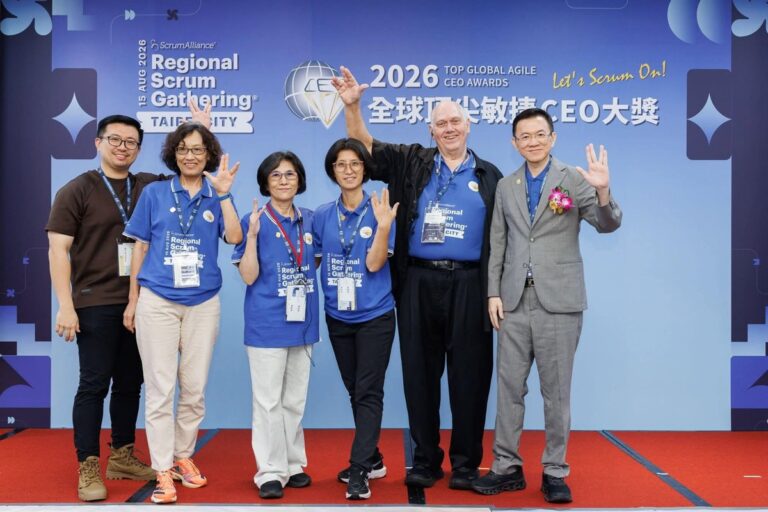
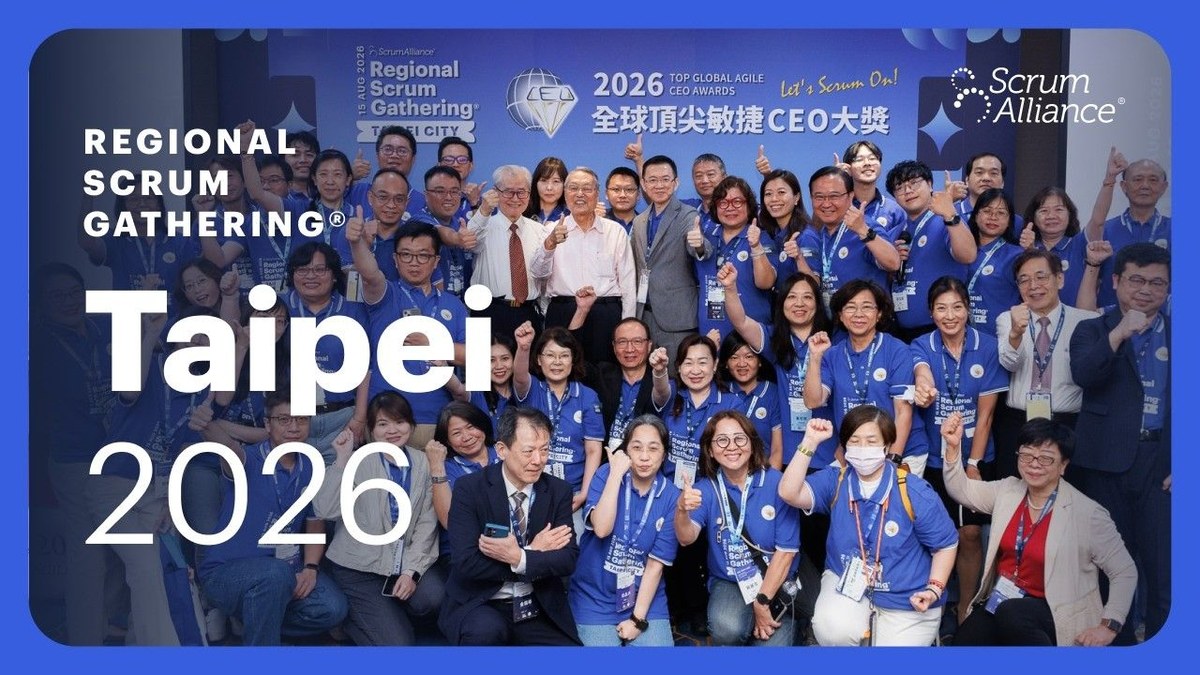
At 7:30 that morning, this same group raised their fists together for a photo at the check-in table.
Right through to the end, the microphone kept moving hand to hand, and not one person in that group spent the day on the sidelines.
Honestly, this is a part I only fully understood afterward myself — a team’s capacity to organize itself is never something you train into people. It’s something you earn by trusting them. Hand over the decision, and only then do they get the chance to prove they can carry it. This group deserves to be remembered by name, not just remembered as “there were volunteers.”
7. From one line on my title card to a post seen by 440,000 people
Seven months ago, “Let the World See Taiwan” existed only on my own title card. Today, Scrum Alliance said that same line to the entire world, in their own words.
Whether a company commits to agile transformation was never about a shortage of methodology — it’s about a shortage of people willing to carry responsibility. Taiwan isn’t short on talent. What’s short is a room where talent is willing to step up and carry that weight. That’s what RSG Taipei exists to build. And I’ve always believed that the scale of any one person isn’t something they declare for themselves — it’s how many people they’re willing to bring along to make something bigger. That’s a thing you can design for, and it’s the opening move of every corporate transformation I’ve coached.
If you also believe this is worth more people seeing, go like it, leave an honest comment, share it — that will do more good than another thousand words from me here: Scrum Alliance’s original LinkedIn post.
The traces of 33 days of preparation are all in here:
讓世界看見台灣|RSG Taipei 2026 結案影片:敏捷,從高階主管開始
If you want to know how to bring “let the world see” home to your own organization, Taiwan Agile Tribe made a one-minute how-to video that walks you through it: One-minute how-to video.
If you were one of those 221 people, one of the 70% in management — or you’re on the fence about whether your own decision-makers should walk into a room like this — here’s the question I want to ask you: when was the last time your company’s leadership sat down, together, to face each other’s hardest problems?
8. If you want your executive team in a room like this: choosing between CSM, CSPO, and CAF
Nothing that happened at RSG Taipei that day happened by accident — it happened because everyone in the room had already worked out which problem each of these three certifications actually solves.
If you’re a Scrum Master, or you’re responsible for making a team’s day-to-day collaboration run smoothly, CSM (Certified ScrumMaster) is the starting point: it teaches you how to run stand-ups, clear impediments, and help a team own its own progress — the shared language of team-level collaboration.
If you’re a general manager, a VP, or you sit at the level where “should we do this, and who gets the resources” is your actual job, CSPO (Certified Scrum Product Owner) is the certification that actually applies to you. It doesn’t teach you how to run a meeting — it teaches the language of trade-offs: what matters most, and what gets done first, at the C-level. Executives earning CSPO has become a genuine trend in Taiwan over the past few years — Chunghwa Telecom completed four training cohorts this July alone, certifying 111 executives across headquarters, branch operations, technology, operations, product, and legal. Chunghwa Telecom President Jung-Sze Lin put it this way: “We want to push Product Ownership from a skill that belongs to product teams into a leadership language shared by the president, the VPs, and the succession pipeline.” That’s not one more certificate to collect — it’s turning product-owner thinking into the shared language of an entire leadership pipeline. I wrote up the full case here: Chunghwa Telecom’s 111 CSPO-certified executives.
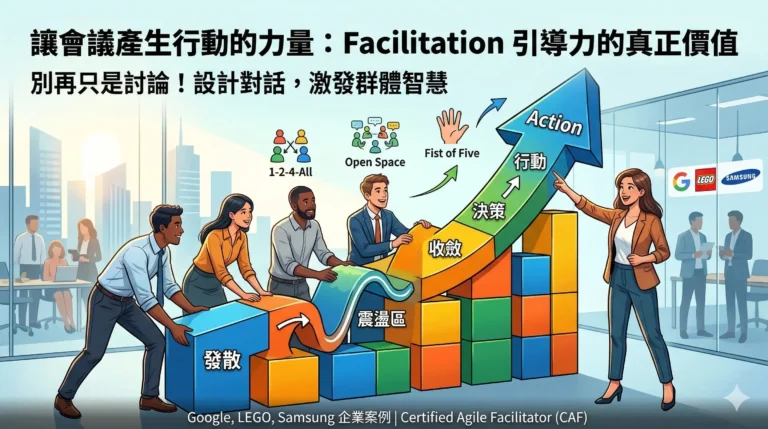
If your role is to bring a room full of people who disagree to an actual shared conclusion — the way 221 people at RSG Taipei were challenged and pressed, table by table, until answers emerged — CAF (Certified Agile Facilitator) teaches exactly that: how to design a conversation where people holding different positions are willing to finish their sentences, instead of just stating them past each other.
Three certifications, three different positions: CSM for the team, CSPO for the decision, CAF for the conversation. Which one you’re missing determines which one you start with.
Executive perspective: These three certifications aren’t three kinds of courses — they map to the three places an agile transformation actually gets stuck: team execution, decision trade-offs, and cross-functional conversation. Miss any one of them, and the transformation stalls halfway through.
Closing: Real scale is what other people choose to say about you
Back to where this started: let the world see Taiwan. When I said that line the day it was recorded, I was thinking about the agile community, about the industry, about Scrum Alliance’s visibility on the world stage. What I didn’t expect was that the first step toward making it real would be Scrum Alliance itself, choosing on its own to point its 440,000-follower account directly at us.
If you want to know whether your own leadership team is ready, or you want to stay on top of the next RSG Taipei, visit the RSG Taipei official website; if you’d rather talk through what you’re seeing directly, write to pmsuccess@gmail.com.