寄送至:
rsgtaipei.tat@gmail.com
主旨:欲由XXX品牌大使推薦參與 RSG Taipei 2026


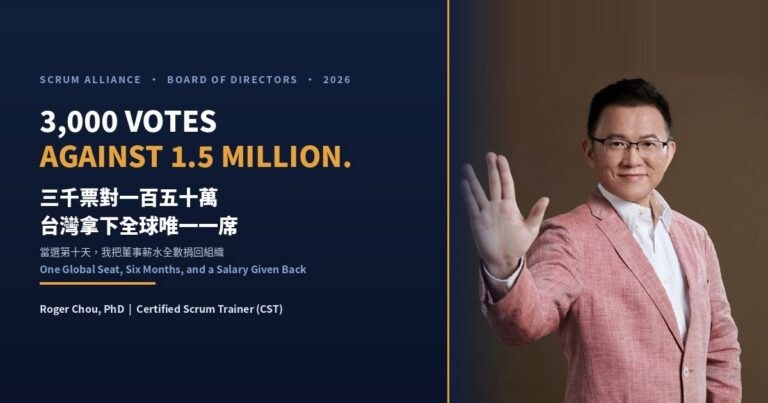
3,000 Votes Against 1.5 Million: Taiwan Wins the Only Member-Elected Seat, and Gives the Salary Back
Out of a global electorate of 1.5 million, one Taiwanese candidate won the single member-elected seat on the Scrum Alliance Board of Directors. Taiwan holds roughly 3,000 of those votes — two in a thousand. The interesting part is not the win. It is what the win came with: a seat that expires on December 31, and a full director's salary donated back to the organization on day ten. That was not modesty. It was a control mechanism.
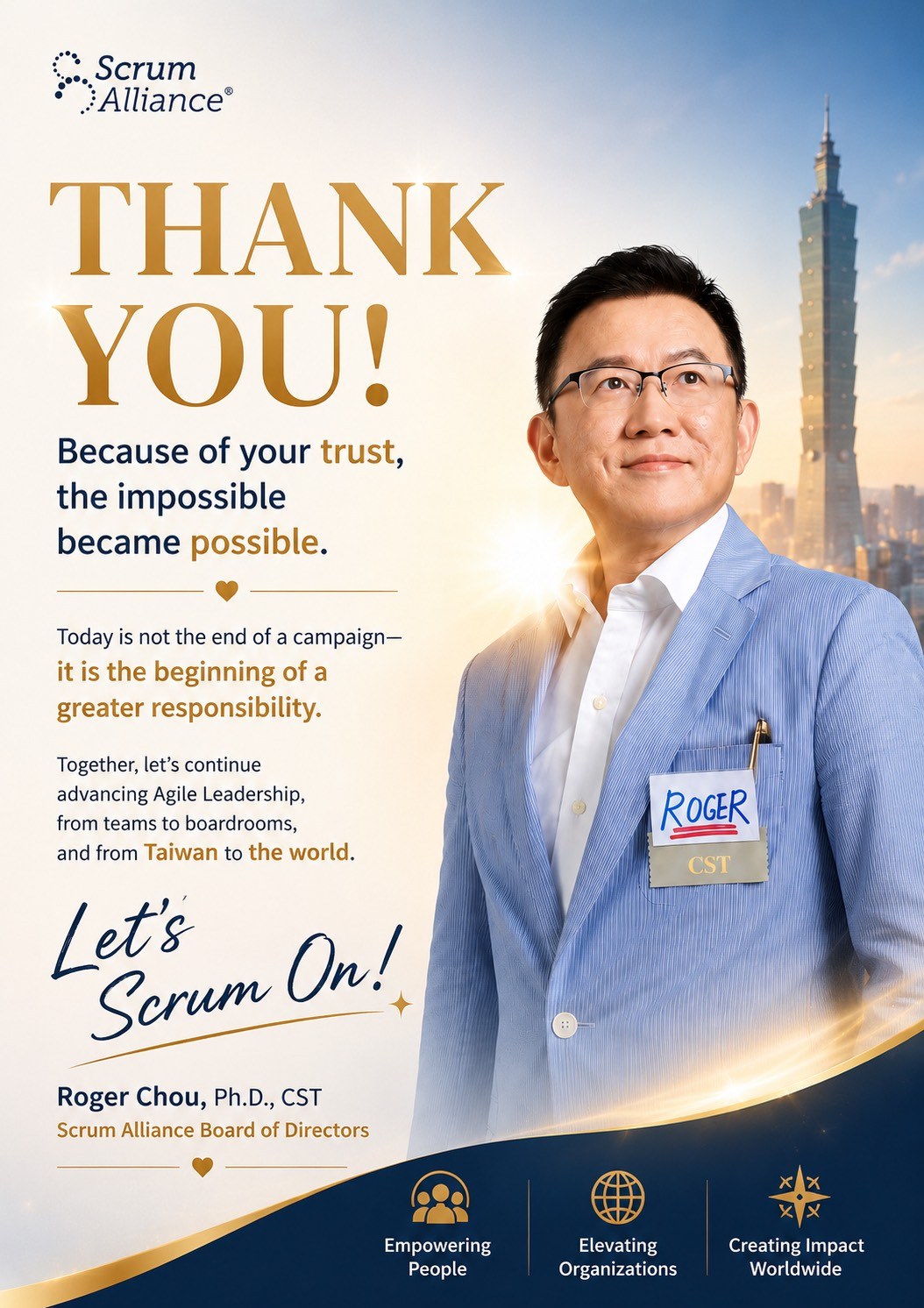
On June 30, 2026, Scrum Alliance sent the election notice. The world’s largest agile professional body seats a minimum of nine directors, three of whom are elected directly by the global membership. The seat up for election this cycle went to Roger Chou, PhD — Taiwan’s only Certified Scrum Trainer (CST) and Taiwan’s International Scrum Ambassador.
Eligibility to vote required one thing: holding a valid certification from the organization. Roughly 1.5 million people worldwide qualified. Around 3,000 of them were in Taiwan. Two in a thousand. On paper, this was not an election. It was a bet.
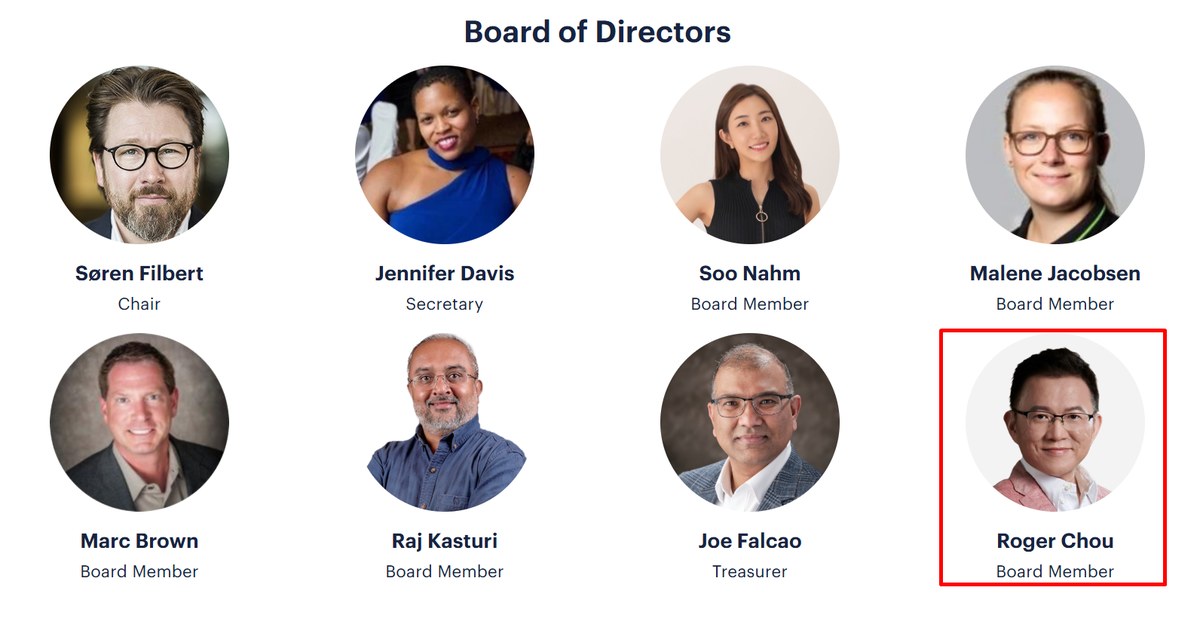
Official announcement: Meet the Board Directors: Roger Chou and Joe Falcao
Three thousand votes moving 1.5 million was never a probability problem
For 3,000 votes to move an electorate of 1.5 million, only one thing can work: every single one of those votes has to come with a reason. Not name recognition — a reason. Someone who can finish the sentence “I know this person, and I know what he changed.”
That cannot be bought. It can only be accumulated. Roger Chou spent ten years accumulating it.
Taiwan’s agile community had no numerical advantage and no language advantage. What actually moved was ten years of classrooms, companies, and senior executives, one at a time. The ballot simply developed the picture that was already there.
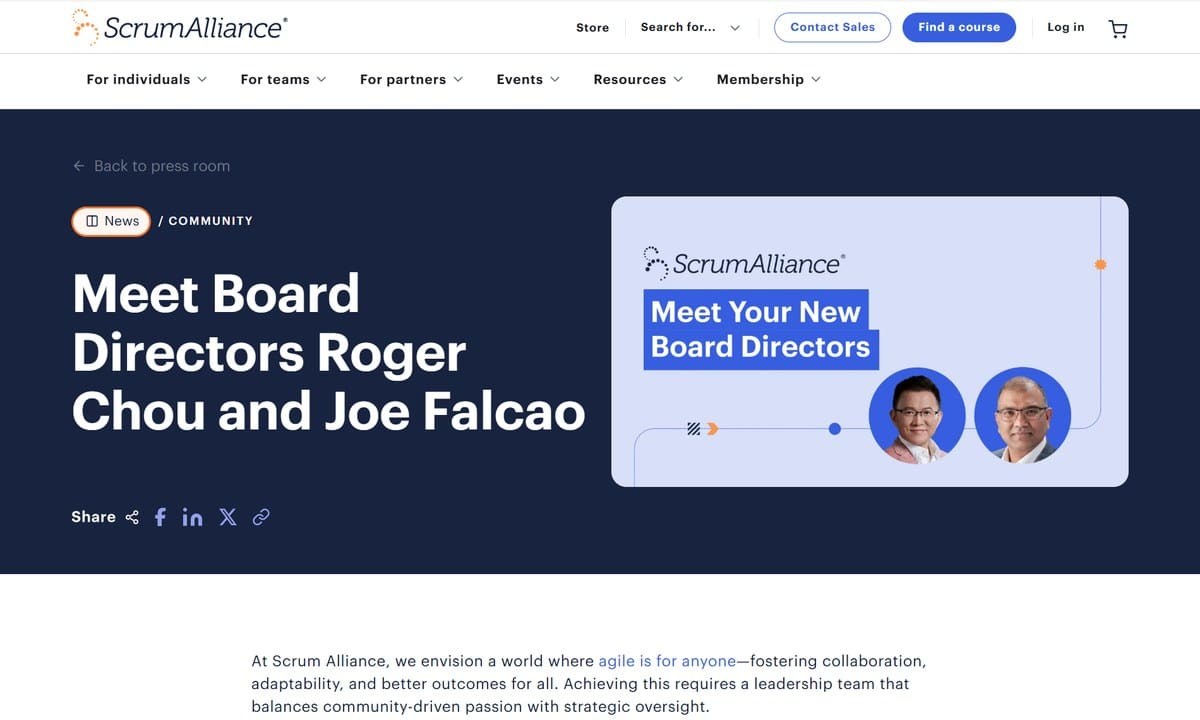
Scrum Alliance’s official site also lists this board on its We Are Scrum Alliance page.
Roger Chou’s view: I never treated this as a probability problem. When resources are unequal, most people respond by shrinking the goal. But contests are not decided by total resources. They are decided by which battlefield you choose.
On day ten, he gave the entire board salary back
Only after the notice arrived did Roger Chou learn the seat was compensated — roughly USD 30,000 a year, close to NTD 1 million. From the decision to run through election day, it had never occurred to him that the seat paid anything.
On day ten, he wrote to Scrum Alliance and donated the full director’s compensation for the term back to the organization. All of it.
This sounds like a performance, so the reasoning deserves to be stated plainly. The moment a seat starts feeding you, every judgment you make at that table quietly begins serving the seat — and you are usually the last to notice. You will still feel objective. You will simply feel that you are “considering things more holistically” now.
Roger Chou’s view: There is an old Chinese line — a person who wants nothing cannot be bent. It sounds antique. Put it inside a boardroom and it becomes a very concrete engineering problem: how do you guarantee that your vote serves the organization, and not your ability to keep sitting there?
The competition: 12,000 professionals trained, and fifteen years at Microsoft
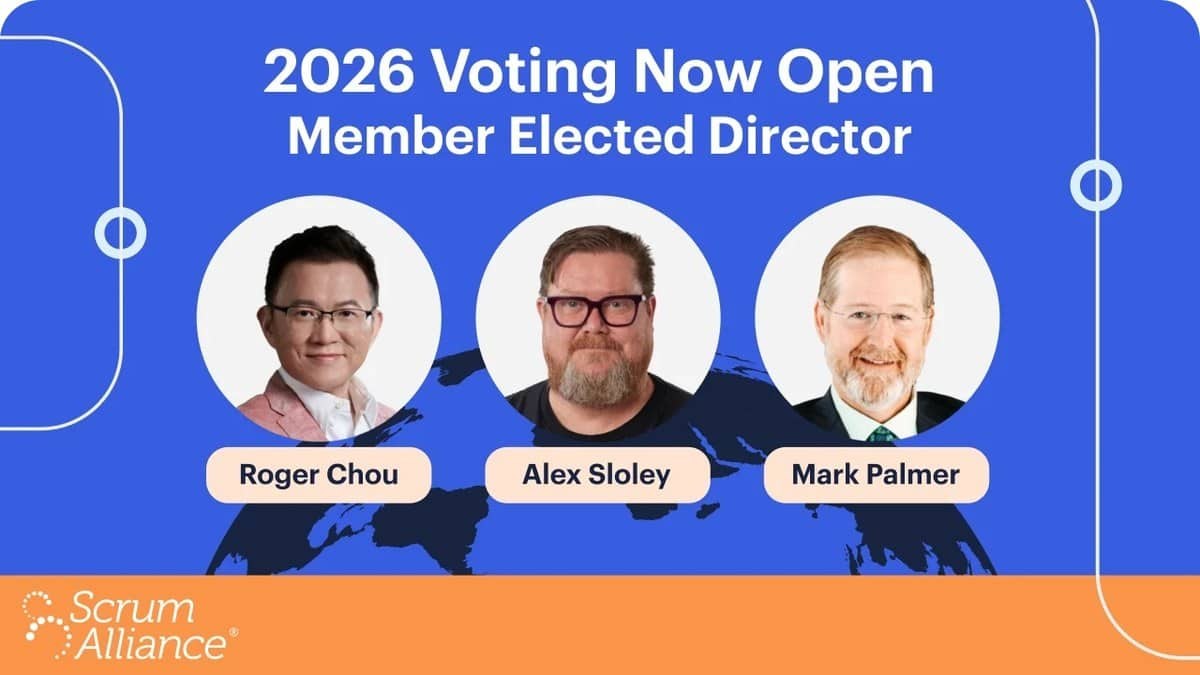
The other two finalists were not lightweights. Mark Palmer brought twenty-five years in the field and more than 12,000 professionals trained, with SWIFT and Capital One on his client list. Alex Sloley spent fifteen years at Microsoft, wrote a book on agile communities, and is based in Sydney.
Both are veterans of the English-speaking world with community bases in North America and Australia — voter pools dozens of times the size of Taiwan’s.
Roger Chou did not compete on headcount trained. He competed on something neither opponent had: a ten-year experiment in moving agile out of the IT department and into the CEO’s office.
Roger Chou’s view: On credentials I lose to them. On voter base I lose by more. But when enough people in one community can say “this person actually changed our company,” that is a credential of a different kind.
The seat expires on December 31
The official announcement is explicit: the elected candidate fills the remainder of a vacated term, through December 31, 2026. Continuing into a full three-year term requires fresh board approval.
Which means winning a global election across an electorate of 1.5 million bought a six-month ticket. Six months — minus learning the agenda, building trust, and understanding the financial structure. The window for actually moving anything is shorter still.
Roger Chou’s view: The length of the term decides how much I can finish. It does not decide whether I go all in. The moment those two things get confused, the previous ten years were pointless too.
Fifteen years of agile in Taiwan, stuck on the same floor
Taiwan has been adopting agile for fifteen years. For most of those fifteen years, it happened inside the IT department. Engineers learned it, engineers used it, and senior executives neither understood it nor felt they needed to.
Where was it stuck? Not in the method. In the fact that the people using the method held no decision rights. However good a Scrum Master is, he cannot change how budgets are built, how bonuses are paid, or why a project absolutely must go live on December 31. Those decisions sit two or three floors above him.
More than one company has run three years of agile adoption, changed tooling twice, run four rounds of training, and still holds meetings exactly the way it did three years earlier. The real cost of those three years was not the training budget. It was three years of market time — and the market does not pause while you adopt.
So Roger Chou made a decision that looked strange at the time: stop teaching engineers, and start teaching CEOs.
Roger Chou’s view: Agile was never the engineers’ property. When senior leaders do not understand agile, what you adopted is a toolset. When senior leaders start thinking in agile, what changes is how the whole company decides.
Four hundred CEOs in a classroom bought those three thousand votes
There is an academic layer underneath this. Roger Chou completed his PhD in Business Administration at National Sun Yat-sen University in three years, against a typical five to seven. NSYSU’s College of Management was the first business school in Taiwan to earn AACSB accreditation, held by only the top six percent of business schools worldwide. His focus there was executive strategy.
His advisor, Professor Hero Lin, now Dean of the College of Management at NSYSU, is Taiwan’s leading authority on competitive dynamics. That field asks three questions: how does a firm become aware of a rival’s move, does it have the motivation to respond, and does it have the capability to respond. Transplant those three questions into today’s market and you have exactly what agile is answering — agile just compresses the cycle to two weeks.
The CST credential itself took ten years. The hard part was never the exam. The hard part is proving you have actually changed something.
Once he had it, the first thing he did was not sell courses. He wrote to five communities he had built over ten years — more than 20,000 people — offering to run CSM certification training for 100 CEOs at no charge: two days, sixteen hours, agile taught and the international certification exam included. The plan allowed a month to fill. It sold out in four days.
Those CEOs were not short of the tuition. They were short of two days. There is only one reason a chief executive hands over two full working days and sits in the audience: trust.
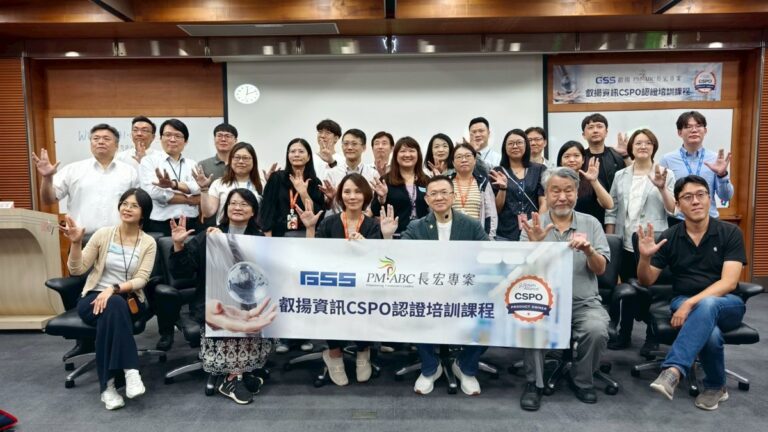
Year one targeted 100 CEOs certified as CSM and finished at 235. Year two targeted 100 CSPOs and hit it. Chunghwa Telecom ran four cohorts in a single month, putting 111 senior executives through to completion; a multinational pharmaceutical company and a southern Taiwan construction group with over NTD 10 billion in annual revenue sat in the same room. As of July 10, 2026, the courses have accumulated 457 participant reviews averaging 4.99 out of 5.
Roger Chou’s view: Somewhere in the second afternoon, a vice president stops and says out loud, “the thing that’s stuck is me.” The room goes quiet for a few seconds. That moment is where those three thousand votes actually came from.
The hand sign in every photo is 3-3-3-5-5
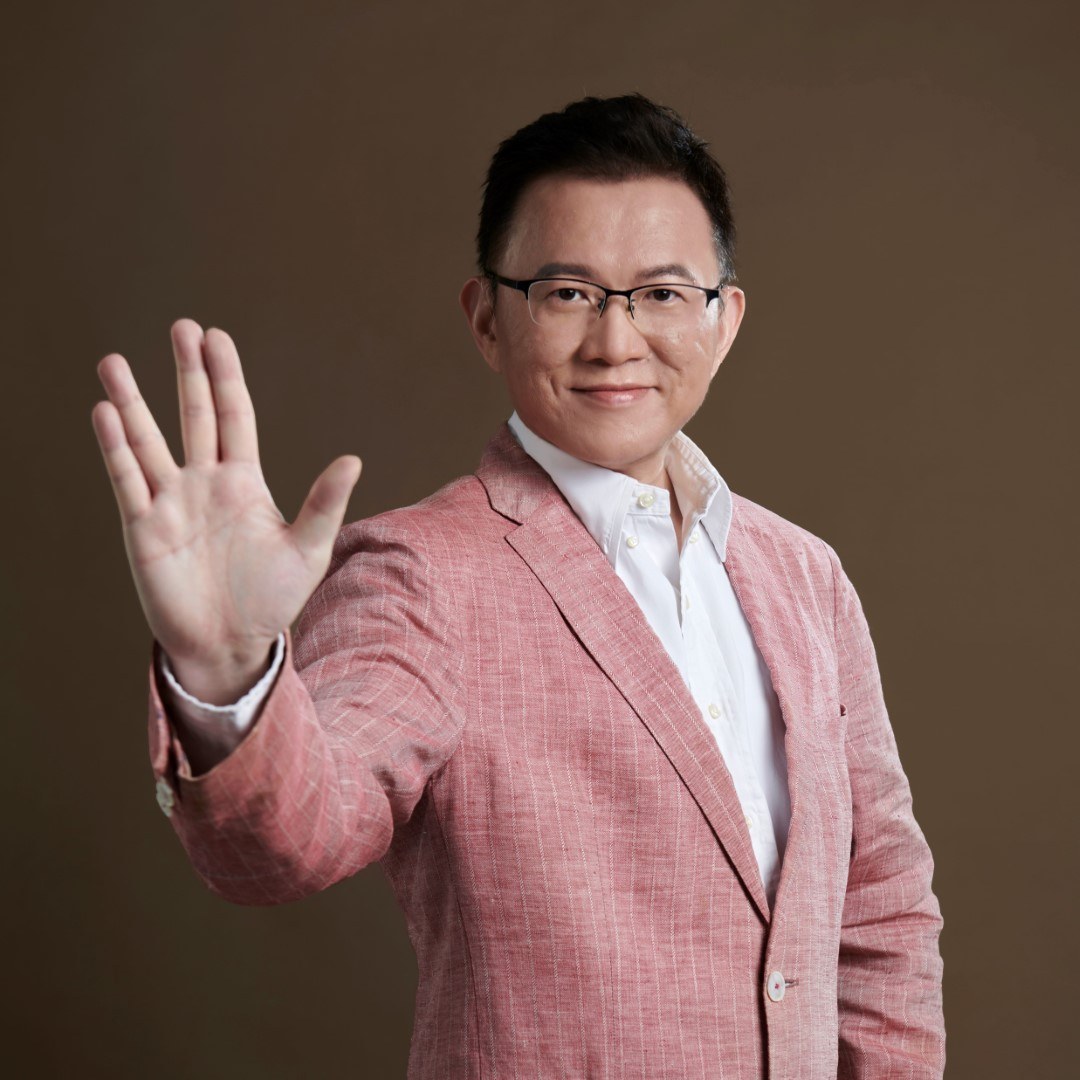
Anyone who has been around the agile community long enough has noticed the hand sign in Roger Chou’s photographs: the Vulcan salute from Star Trek.
It is not only a nod to pop culture. It is a memory device. One hand, and the entire skeleton of Scrum is sitting on it. Three pillars, three accountabilities, three artifacts, five events, five values. 3-3-3-5-5.
Scrum is hard to learn not because it is complex, but because it is so simple you assume you have memorized it. Then you try to use it and cannot list the parts.
Roger Chou’s view: If a framework cannot be recited in five seconds, it will never make it into a CEO’s head. This hand sign is the entrance I built for it.
Influence is not what the seat gives you
Most people assume influence arrives with the seat. This case ran the other way. Precisely because he first let go of what the seat could provide — the salary, the monetizable title, the security of possible reappointment — he got back the freedom to judge while sitting at that table.
If you are a CEO, this maps directly onto your own building. How many people in your leadership team already have their judgment tied to their position? They will not tell you, because they do not know it themselves. What you will see instead is meetings running longer, consensus getting thinner, and the real issue only surfacing in the hallway after everyone leaves.
If you are a middle manager, that feeling of “I’ve raised it three times and nothing happened” is usually not a weak proposal. It is a proposal that hit a position on its way up — one that cannot admit it is tied.
That is not a communication problem. That is a decision environment where nobody can speak freely anymore.
Roger Chou’s view: Influence is not granted by the seat. It comes back to you the moment you are willing to let go of what the seat could give you.
Closing: the seat expires, the change does not
The first goal of the term is to send Scrum Alliance one Taiwanese case study per quarter for global publication. The first comes from construction, the second from telecommunications. Neither is a tech company, and that is exactly the point: agile is not the tech sector’s property. It belongs to any organization that has to make fast judgments.
Whether the board extends the term in six months, nobody knows. But the seat expires and what you actually changed from it does not.
If you are waiting for a better moment before moving your decision layer, here is one reminder: your organization is not going backwards, but your market is going forwards. Add those two together and do the math yourself.
Where do you start? Not with another strategy meeting. Pick a day, put your senior team in one room, use one shared language, and take the same problem apart again. Whichever layer it is stuck on will show itself fast. This does not run on luck. It can be designed.
The place to design it, practise it, and think it through with an entire community is RSG Taipei 2026 — Taiwan’s most important gathering for agile leadership, where practitioners who believe agile starts with senior executives put value prioritization, product governance, and decision design on the table and sharpen them together.
Three thousand votes, one global seat. This is not one person winning. This is Taiwan being seen. And for the next six months, we intend to spend it hard.
Tickets and details at the official site: https://www.rsgtaipei.org/
This is the English edition of the RSG Taipei news article 三千票對一百五十萬:台灣拿下 Scrum Alliance 全球唯一一席,然後把董事全薪捐了回去. Adapted from Roger Chou’s blog.
▶ Watch the RSG Taipei 2026 Promotional Video (English Version)