寄送至:
rsgtaipei.tat@gmail.com
主旨:欲由XXX品牌大使推薦參與 RSG Taipei 2026


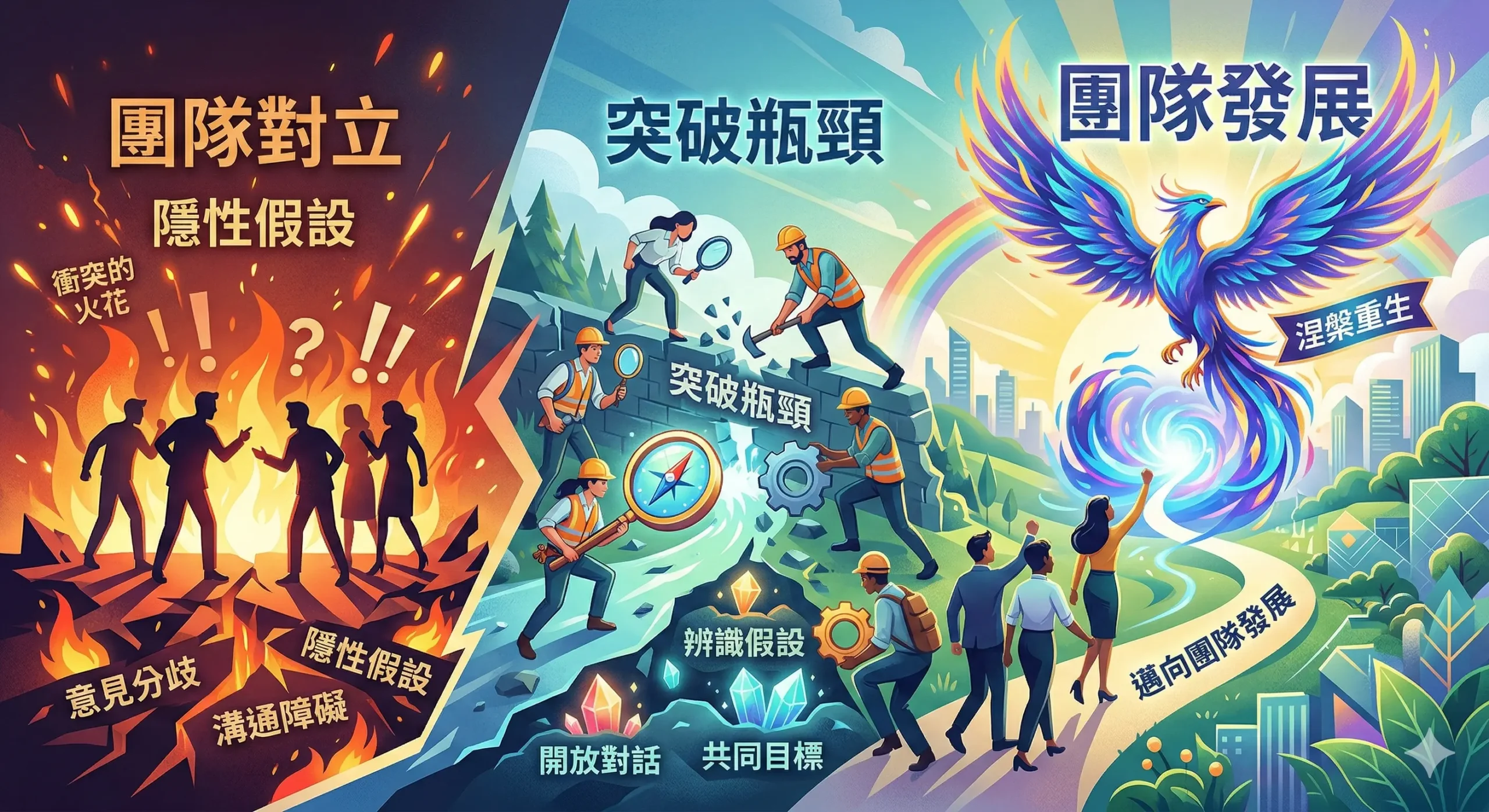
透過「假設」轉化衝突
給敏捷管理者的導讀語(引導精神轉化)
「在敏捷開發的快節奏中,衝突往往源自於成員間未經檢核的『假設』。Larry (aka Lawrence Philbrook)透過 ICA-ToP 的深度觀察,教導我們如何像剝洋蔥一樣,層層撥開彼此心智模型中的預設立場。這不只是在解決衝突,更是在進行一場團隊的『心智模式重構』,讓衝突不再是阻礙,而是推動 Sprint 前進的真實對話。」
本文作者:Lawrence Philbrook
你有多常在資訊極其有限的情況下就做出評斷?你是否曾與他人發生爭執,明明雙方掌握的資訊相似,卻得出截然不同的結論?你是否曾覺得他人的決定很不可思議、不按牌理出牌,甚至根本就是錯的?這些評斷往往植根於過去的經驗或「故事」,並透過一連串的決策與習以為常的慣性而變得根深蒂固。許多反應模式是在無意識中發生的。這是一個自然的過程,是為了生存與成長而演化出的機制。然而,我們已不再處於單純求生存的年代,我們需要重新訓練自己,更有意識地主導自己的行為——這並非要放棄判斷的技能,而是要對如何運用這項技能變得更敏銳、更具意圖性(intentional)。
ICA Taiwan 發展了一套「假設探索流程」(Assumptions Process),這套流程涉及檢視一個人深層的運作信念,以及隨之而來的行動。這是一場對於「假設」的探索旅程,而這些假設正影響著我們看待自己的方式,以及我們對待自己與他人的態度。什麼是「假設」? 假設是一種信念或心智形象(image),它會導致一個人在面對特定刺激時,選擇特定的行為反應。我們在內在建立了一套(無論是有意識或無意識的)「程式」,自動地影響我們如何體驗某個事件或關係。大多數人並未察覺這些程式的存在,然而一旦建立並固化,它們就會有阻礙生產力或創造性的反應。假設總是基於過去,但決策與行動卻是與「當下」相關。 我們常常會因為假設與行動不符而感到沮喪或內心衝突,或與他人產生矛盾。
我們開發了一項練習,旨在幫助個人和組織識別正在運行的假設,並自問:「這是否適用於我目前的狀況?」「是否有其他比我的(或我們的)更有效的假設?」有兩種情境能讓釐清與探索運作假設變得更容易:
- 衝突發生時: 當假設有差異時,衝突會更加突出,也更容易被發現。
- 陷入僵局時: 當團隊或專案停滯不前,團隊合作有助於更清晰地表達不同的觀點。
彼得.聖吉(Peter Senge)在《第五項修煉》中描述了學習型組織的兩項關鍵修煉:「自我超越」與「團隊學習」。識別自己探索假設的能力,並真實地陳述他人的假設,是「自我超越」這項修煉的核心。這並不代表你認同所有觀點,而是你能誠實地理解它們,進而有機會找到「突破性解決方案」。所謂突破性方案,是指超越任何一組假設的局限性,從而提出創造性的解決方案。能識別他人的運作假設並採取適當行動的能力,是一項至關重要的個人技能。
這套流程的潛力,不只限於個人對自身或他人假設的識別,它更涉及培養團隊共同揭露假設的能力,並自覺地決定哪種假設,最符合當下的現實與團隊使命。這種「團隊學習」流程,正是發展學習型組織的核心。以下摘自查爾斯‧漢迪 (Charles Handy) 的《管理夢想:學習型組織》(MANAGING THE DREAM: THE LEARNING ORGANIZATION),該文發表於上一期《形象雜誌》(Image Journal),探討了如果你真想持續學習,就需要超越個人技能發展的範疇。
在一個充滿不確定性的世界裡,我們唯一能確定的就是「不確定性」,因此我們需要不斷自我更新、重塑和活力的組織。這些組織就是學習型組織,它們擁有學習的習慣。正如世界在變化,學習的過程也在變。過去,未來是現在的延伸,因此可以合理地假設「今天行之有效的方法明年也同樣有效」。但如今,這種假設必須被摒棄。我們正目睹著變革,這種變革不僅加速發展,而且具有非連續性。幾乎可以肯定的是,過去行之有效的方法在下一次將完全失效。
學習型組織建立在對「能力」的假設之上,並由四個特質支撐:好奇心、包容、信任與團結感 (Togetherness)。團結是解決之道。現今企業面臨的問題,幾乎沒人能單打獨鬥解決。從某種意義上來說,這反而是好事,因為好奇心、實驗精神和寬容都需要共享。孤獨的學習者往往學習速度慢、學習效果差,而合作的人可以互相學習,創造綜效(Synergy)。
探索流程 (The Process)
這個流程相對簡單。你可以透過反思自己與客戶、供應商、新員工或家人的關係來發現假設。特別是那些看似無解、雙輸(No-win)的僵局。
【案例:廣告代理商】
創意總監(CD)和行銷總監(MD)在新廣告片的製作上產生了分歧。故事板展示給客戶後,客戶對創意方案、成本和製作進度都提出了質疑。
- CD 的反應: 創意總監憤然離席,拒絕繼續討論。他究竟想要什麼?他想確保廣告片的品質和藝術性不受影響。他認為,離開是為了給自己爭取更多時間,以便之後更有力地繼續討論。
- MD 的反應: 市場總監氣得幾乎無法忍受,他生氣的對像不是客戶,而是創意總監。他無法理解為什麼創意總監要讓他一個人去向客戶解釋一切。同時,他也明白自己的首要任務是確保在保證品質的前提下盡可能降低成本,並讓客戶滿意。
- 結果: 客戶感到困惑和沮喪,最後選擇了另一家廣告公司。
有哪些選擇?
- 嘗試加強團隊合作,每個人都應該溝通自己的感受,並要求其他成員也這樣做。
- 向上級尋求協助:要麼直接介入,要麼至少引入第三方參與討論,以確保客觀性。。
- 各司其職,由客戶評判。
- 重新評估工作量,讓我們有時間真正為這位顧客創造價值。
- 更換負責人員。
透過花時間討論先前運作的假設,每位總監都有機會表達支持其立場的假設。其中一些假設可能根本不衝突,實際上甚至可能相互支持。一些次要的假設很容易調和,並且可以透過一些簡單的實踐來克服這些不便。在此案例中,衝突的核心在於假設與品質和價格的衡量標準有關。除非他們能找到一種突破性的調和方法,否則他們將反覆陷入同樣的衝突之中。他們現在正在籌備選項1。這會奏效嗎?還有待觀察,但至少這讓兩位總監開始欣賞彼此的價值觀,而非持續內鬥。
引導步驟 (Procedure)
請每個人先獨立思考實例,再分享給全體。身為引導者,你要營造深度對話的空間。你的任務是幫助團體以尊重的方式探索假設的多樣性。請溫柔地對待參與者,因為討論越深入,就越有可能觸及大家的痛處。
I. 釐清衝突 列出 2 到 3 個工作中亟待解決的關鍵衝突,這些衝突必須至關重要,而且你必須相信其他人也希望得到解決。
- 逐一處理,最重要的優先。盡可能完整且客觀地描述情境。
- 如果解決方案令我滿意,它看起來會是……
- 如果解決方案令對方滿意,它看起來會是……
(盡可能從多角度觀察:嘗試從各種側面與視角環繞這個衝突。)
II. 識別假設 陳述支持目前立場的假設。陳述支持當前立場的假設。為什麼這個衝突還沒解決?哪些根本的意見或性格差異導致了衝突?涉及哪些價值觀?是什麼在維繫這場衝突?你的「立場」是什麼樣的? 「對方」的立場又是什麼樣的?……
- 我阻礙問題解決的假設…
- 對方阻礙問題解決的假設…
再次審視這場衝突。如果溝通出現問題,誰牽涉其中?每個人為何以及如何做出貢獻?誰從衝突的持續中獲益?如果你假設衝突對所有參與者都無益,這又會帶來什麼影響?
III. 深層挖掘 更進一步探究支撐這些假設的深層價值觀。問「為什麼?」,然後再繼續追問一次「為什麼」。
- 支持我的立場的深層信念……
- 支持對方立場的深層信念……
IV. 尋求突破 試著深入理解正在發揮作用的假設,想像不同視角,尋找綜效。 最後,。如果必須在不同的假設之間做出選擇,確定當下最重要的是什麼。如何將其傳達給其他人,以便他們也能以新的方式行事?
- 列出 5 件你可以做的事(改變假設、改變情境、或改變你的反應)。可能性的突破性解決方案是什麼?我將如何化解衝突?
- 經過這個過程,我的假設發生了哪些改變?
結語 (Closing)
史蒂芬.柯維(Stephen Covey)曾談到:要以對方滿意的方式陳述假設。這種溝通本身就能釐清解決問題的機會。如果你能真實而深刻地闡述假設,你就能靈活地採取行動。過早停止探索只會加劇挫折感。我們必須持續深入探索,直到我們找到合理的解釋,超越「惡意」、「笨蛋」甚至「糟糕的假設」等標籤,才能以合理的方式闡述假設。這需要從對方的角度看待問題──不一定要認同對方的觀點,但能真正理解對方。
這是一個探索新現實的過程。它需要時間。個人或群體可能會經歷否認、責備和悲傷的階段,最終才能突破困境,獲得新的理解。
這個過程是一項修煉。有些人有毅力不斷努力學習;有些人則覺得放下成見很難。或許一個有幫助的起點是在任何情境下自問:「我該如何讓這成為一個學習的機會?」 「可以做出什麼改變,好讓這個情境對其他視角敞開?」
這不是一場智力遊戲,而是關乎建構新的「心智圖像」,進而改變人們的態度和行為。這是一段意義深遠的自我肯定與和解之旅。
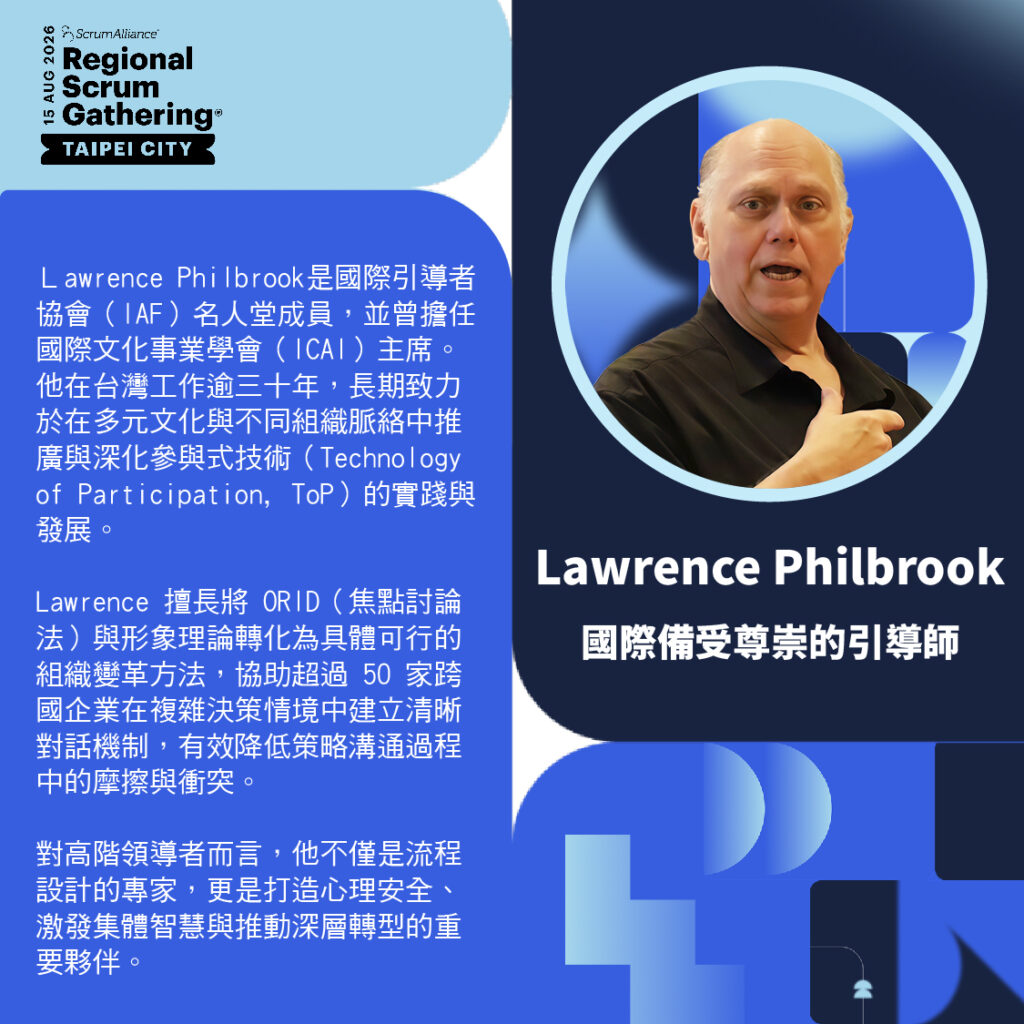
RSG Keynote Lawrence Philbrook
RSG Taipei 2026 最後保留票索票中
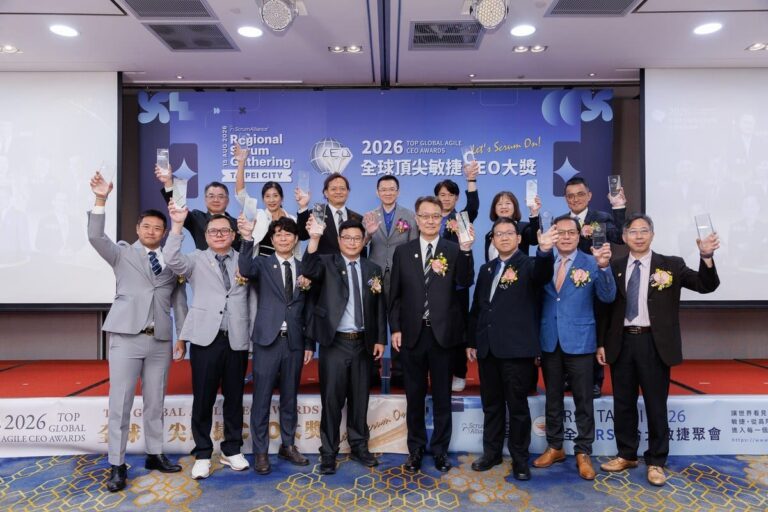
目前 RSG Taipei 2026 已吸引超過 180 位專業人士索票,其中超過六成為企業管理層。
如果你關心:AI 時代的組織速度、敏捷治理與企業轉型、跨產業的管理實踐——
RSG Taipei 2026 將會是一個非常難得的交流場域。歡迎前往官方網站報名:https://www.rsgtaipei.org/
TRANSFORMING CONFLICT THROUGH ASSUMPTIONS
By Lawrence Philbrook
How often do you make judgments based on little data? How often have you had a disagreement with another person in which both of you had similar data but reached different conclusions? How often have you experienced other people’s decisions as unusual or unorthodox or just plain wrong? These judgments are based on past experiences or stories, solidified through a sequence of decisions and developed habits. Many of these response patterns are unconscious. This is a natural process, developed as part of our maturing and survival, but we are no longer in a time of simple survival and need to begin retraining ourselves to be more conscious in determining our own behavior, not by giving up the skill but becoming more sensitive and intentional about how we employ it.
ICA Taiwan has developed an Assumptions Process which involves examining one’s deep operating beliefs and the actions that result. It is a discovery of the assumptions that affect the way we perceive ourselves and the attitudes of ourselves and others. What is an assumption? It is a belief or an image that causes one to select a specific behavior in response to perceived stimuli. We create within ourselves consciously or unconsciously a “program” that automatically affects how we experience a certain event or relationship. Most of us are not aware of these programs, yet once created and solidified they can block productivity or creative response. Assumptions are always based on the past, but decisions and actions are related to the now. Often, we find ourselves frustrated or in conflict within ourselves or with others because the two don’t match.
We have developed an exercise to help in training individuals and organizations to recognize assumptions that are operating and to ask: “Is this appropriate to my current situation?” “Are there other assumptions that are more valid than my own or ours?” Two situations make the task of clarifying and exploring our operating assumptions easier. The first is conflict which at times of differing assumptions is highlighted and easier to spot. The second is when a group or project becomes stuck and finds that working with a team helps in articulating diverse perspectives more clearly.
Peter Senge in his book “The Fifth Discipline” describes two key disciplines for a “Learning Organization”: Personal Mastery and Team Learning. Recognizing your own skill in exploring assumptions and truly articulating the assumptions of others is the focus of the discipline of Personal Mastery. This does not mean you agree with all the opinions but that you can honestly understand them, therefore having an opportunity to come closer to a breakthrough solution. A breakthrough solution is one that goes beyond the limitations of either set of assumptions to a creative solution. The ability to recognize another’s operating assumptions and to then act appropriately is a vital personal skill.
The potential of the assumptions process can move beyond the individuals need to identify their own or others’ assumptions. It involves developing an ability as a team to expose assumptions and consciously decide which assumption is most appropriate to the current reality and the team’s mission. This Team Learning process is at the core of developing a learning organization. The following excerpt from Charles Handy’s MANAGING THE DREAM: THE LEARNING ORGANIZATION from the last Image Journal, talks about the need to move beyond the development of personal skills if you truly wish to learn constantly.
In an uncertain world, where all we know for sure is that nothing is sure, we are going to need organizations that are continually renewing, reinventing, reinvigorating themselves. These are the learning organizations…with the learning habit. Just as the world has changed, so too has the process of learning …. When the future was an extension of the present, it was reasonable to assume that what worked today would also work next year. That assumption must now be tossed out. We are seeing change that not only accelerates ever faster but is discontinuous. It can almost be guaranteed that what used to work well in the past will not work at all next time around.
The learning organization is built upon an assumption of competence that is supported by four characteristics: curiosity, forgiveness, trust and togetherness….. One solution is togetherness. Few, if any, of the problems businesses face nowadays can be handled by one person acting alone. That is fortunate in a way, because curiosity, experimentation and forgiveness need to be shared. Lonely learners are often slow and poor learners, whereas people who collaborate learn from each other and create synergy.
THE PROCESS
The process is relatively simple. You can discover assumptions by reflecting on your own experience in relationship to customers, suppliers, new hires, or family members, in any situation of “no-win” which appears to be seemingly unresolvable.
In an advertising Agency:
There is a conflict between the Creative Director and the Marketing Director over the creation of a new commercial. The story board is shown to the client. The client questions the creative approach, the cost involved and the slowness of production. The CD stomps off and refuses to participate in the conversation. What does the CD want? The CD wants to make sure the quality and artistic flavor are not lost. He feels by walking off he has preserved the opportunity to continue the discussion with more ammunition. The MD is so angry he can hardly stand it, not at the customer but at the CD. He can not understand why the CD left him to explain everything to the customer. Meanwhile he knows his priorities have to remain making sure that while the quality is as good as possible the costs are kept down and the customer is happy. The customer is confused and frustrated and takes his business to another agency.
What are some of the choices?
1. Try to reinforce teamwork by each communicating what he/she is experiencing and asking the other player to do the same.
2. Ask for help from superiors: either intervention or at least a third party into our conversation for objectivity.
3. Just do our own jobs and leave the judgment to the client.
4. Re-evaluate our workloads so we have time to really produce for this client.
5. Put someone else on the job.
By taking time to talk through the assumptions that were operating, each director gets a chance to express the assumptions he believes support his position. Some of these may not conflict at all and in fact may support each other. Peripheral assumptions can be easily reconciled and simple practices developed to overcome these inconveniences. In this case, the core assumptions that clash have something to with the measurements of quality and price. Until they can figure out a way to reconcile with a breakthrough, they will come back to the same conflict over and over. They are now in the process of doing number 1. Will it work? They must wait and see, but already it has given the two directors an appreciation of each others values and of each other instead of fighting.
PROCEDURE
Have each person work through examples individually, then share with the whole group. As the facilitator, you allow for deep conversation. Your task is to help the group explore the diversity of assumptions in an honoring fashion. Be gentle with people. The deeper you get, the greater the chances are for touching open wounds.
I. List 2 or 3 conflicts you experience at work that are critical to resolve. They must be of the utmost importance and you have to believe others want them resolved also.
1. Take them one at a time, the most important first. Describe the situation as fully and objectively as possible.
2. If resolved to my satisfaction, it would look like ….
3. If resolved to other’s satisfaction ……
Walk around the conflict as many ways as you can — Look at it from as many sides or angles as possible.
II. State the assumptions that are supporting the positions being taken. Why has this conflict not already been handled? What fundamental differences of opinion or personality contribute to the conflict? What are the values involved? What sustains the conflict? What does your “side” look like? The “other” side?
4. My assumptions preventing resolution ….
5. The other’s assumptions preventing resolution ….
Walk around the conflict again. If communication is breaking down, who is involved? Why and how does each contribute? Who benefits from the continuation of the conflict? If you assume the conflict is non-productive for everyone involved, what difference does that make?
III. Go one step further to uncover the deeper values sustaining these assumptions. Why? Then ask why again.
6. My own deep beliefs supporting …….
7. The others deep beliefs supporting…..
IV. Try to reach the point of deep understanding of the assumptions that are operating, imagining a different perspective, searching for a synergy. Finally, if a choice must be made between assumptions, determine what’s most important now. How can it be communicated to others so they can also behave in a new way?
8. List 5 things you can do to change the assumption, the situation, your response? Possible breakthrough solutions? What I will do to reconcile the conflict?
9. How has my assumption changed because of this process?
CLOSING
Stephen Covey talks about stating the assumptions to the satisfaction of the other party. This communication itself clarifies opportunities to resolve the situation. If you can articulate the assumption truly and deeply, you have the flexibility of doing something about it. Stopping the process too soon only compounds the frustration. We have to probe until it makes sense, getting beyond the concept of “evil” or “stupid people” or even “bad assumptions,” to begin to articulate the assumption in a way that makes sense. It’s being able to see it from the other perspectives – not necessarily agreeing – though this sometimes happens.
This is a process of exploring a new reality. It takes time. An individual or group may go through the levels of denial, blame, and grief before breaking through to a new understanding.
This process is a discipline. Some have the will to continually struggle to learn through this process — others find it more difficult to let go. Perhaps a helpful start is to ask in every situation: “How can I make this a learning situation?” “What change could be made which would greatly open up this situation to another perspective?
This process is not an intellectual exercise. It is about new images that will result in changed attitudes and behavior. This is a profound journey of affirmation and reconciliation.
—————————————————————————————————————- LAWRENCE E. PHILBROOK is a facilitator and organizational transformation consultant. He has been designing processes for teams and leaders in varied cultural settings for over twenty years. He joined the Institute of Cultural Affairs a global not-for-profit in 1972. ICA is focused on participation as a catalyst for organizational change and community development. Lawrence has worked outside the US since 1977 doing extensive company and community-based projects in over 20 nations. For the past 12 years he has lived in Taiwan while working across Asia. His current focus is in promoting facilitation and dialogue in organizations and individual development. If you wish further conversation please contact me at icalarry@ms69.hinet.net.